How to Build a Personal Brand in India as a Freelancer (Without Being Fake or Cringe)
The phrase “personal brand” makes a lot of people uncomfortable.
It conjures images of LinkedIn posts that begin with “I was rejected by 47 companies before founding a unicorn startup” — followed by seventeen crying-face emojis and a plug for a ₹4,999 course. It conjures motivational quotes over stock photos of sunsets. It conjures the particular strain of performative vulnerability that has become so common online that it no longer feels vulnerable at all.
If that is what personal branding means, then no — you do not need a personal brand.
But that is not what personal branding actually is.
A personal brand, stripped of all the noise, is simply the answer to one question: when someone hears your name, what do they think of?
That’s it. Nothing more complicated than that. Your personal brand is your reputation, made visible and consistent. And for a freelancer in India trying to build a sustainable income, your reputation is quite literally your most valuable professional asset.
This post is about building one — honestly, specifically, and without becoming someone you don’t recognise.
Why Personal Brand Matters More for Indian Freelancers Than They Think
In a country with hundreds of millions of internet users and a rapidly growing freelance economy, the competition for clients and attention is intense. Every niche has dozens of practitioners. Every platform has thousands of applicants.
The freelancers who consistently win better clients, command higher rates, and receive inbound opportunities rather than constantly chasing them — they almost always have one thing in common. Not necessarily the most impressive portfolio. Not necessarily the most years of experience.
They are known for something specific.
When a potential client needs a writer who specialises in SaaS content, they do not scroll through a hundred generic profiles. They remember the person who writes specifically and thoughtfully about SaaS. When a startup needs a designer who understands fintech interfaces, they think of the person they’ve seen post insightful observations about fintech UX for months.
Specificity is the engine of personal branding. And specificity, for most Indian freelancers, is entirely within reach — because most are not specific enough to stand out.
Step 1: Get Specific About What You Do and Who You Do It For
The most common personal branding mistake is trying to appeal to everyone.
“I am a content writer” competes with three million other content writers. “I write long-form SEO content for B2B SaaS companies in India” competes with maybe two hundred.
The narrower your positioning, the stronger your brand — not despite the narrowness, but because of it. Narrowness signals expertise. It tells a potential client: this person does exactly what I need and only what I need.
You do not need to turn away other kinds of work. You just need to be known for one thing so clearly that the right clients find you automatically.
Ask yourself three questions:
What do I do best? Not what you have done — what you genuinely do better than most people at your level. The skill that comes most naturally, produces the best results, and gives you the most energy.
Who benefits most from this skill? The specific type of business or person who would get the most value from your best work. The more specific you can be — industry, size, stage, problem — the better.
What outcome do I deliver? Not “I write blog posts.” Not “I design websites.” The actual outcome. “I help early-stage Indian startups rank on Google within six months.” “I help D2C brands reduce their ad spend by improving their landing page conversion rates.”
Your personal brand statement is the intersection of these three answers. One sentence that tells the right person immediately: this is exactly who I’ve been looking for.
Step 2: Choose One Platform and Show Up Consistently
The worst personal branding advice is “be everywhere.” It is also the most common.
Being everywhere means being thin. A scattered presence across Instagram, LinkedIn, Twitter, YouTube, and a blog is not a brand — it is noise. Each platform requires a different tone, a different format, a different audience strategy. Trying to maintain all of them simultaneously produces mediocre content on all of them.
Pick one platform. Go deep.
For most Indian freelancers building a B2B or professional service brand, LinkedIn is the right choice. Here is why:
The people who hire freelancers — founders, marketing managers, content leads, startup operators — are disproportionately on LinkedIn. The platform’s algorithm actively promotes individual content creators over corporate pages. And India’s LinkedIn user base is growing fast, which means the early-mover advantage is still available to people who show up consistently today.
For freelancers whose clients are consumers rather than businesses — social media managers, fitness coaches, personal stylists — Instagram may make more sense.
The principle is the same regardless of platform: one platform, consistent output, a clear point of view. Show up there for six months before considering anywhere else.
Step 3: Develop a Point of View
This is the hardest part and also the most important.
Content without a point of view is invisible. “Here are five tips for better copywriting” is a post that exists in ten thousand variations. Nobody reads it. Nobody remembers it. Nobody thinks of you when they need a copywriter.
“Why most Indian brands write for themselves instead of their customers — and how to fix it” is a point of view. It takes a position. It says something. It is slightly uncomfortable to agree with and very uncomfortable to disagree with.
A point of view does not require being controversial for its own sake. It requires being honest about what you actually think — about your industry, your craft, your clients, the problems you keep seeing, the mistakes you keep watching people make.
Your point of view comes from your direct experience. Not from summarising what you have read. Not from restating conventional wisdom. From the things you have actually done and actually noticed.
For Eueezo, the point of view is built in: honest, India-specific, transparent. While everyone else posts aspirational income screenshots, this blog posts real numbers, real failures, real timelines. That contrast — honesty in a space full of performance — is a point of view. And it is the entire brand.
What is yours?
Step 4: Create Content That Demonstrates Your Thinking
Personal branding is not self-promotion. It is proof of work.
Every post you publish, every comment you leave, every response you write is a sample of how you think. Potential clients reading your content are asking themselves one question, consciously or not: “Does this person think in a way that would be useful to me?”
The content that builds the strongest personal brand is not “here are my achievements.” It is “here is how I think about problems you have.”
Specific content formats that work for freelancers:
Case studies. A specific project you worked on, the problem you solved, the approach you took, the result you delivered. Change the client’s name if needed. The thinking is what matters, not the name.
Lessons from real experience. Not “five tips for better pitching” — “the specific mistake I made in my pitch to a client last month and what I changed.” Specific and personal beats general and authoritative every time.
Observations about your industry. Things you keep noticing that other people seem to be missing. Patterns in client behaviour. Trends in your niche. Problems you keep seeing that nobody seems to be solving well.
Honest takes on common advice. Find a piece of conventional wisdom in your industry and respectfully disagree with it, with evidence from your own experience. This is memorable in a way that agreeing with everything is not.
Post once or twice a week. Not more — consistency matters more than frequency, and quality decays with quantity. Every post should make the reader think something they didn’t think before they read it.
Step 5: Be Findable
A personal brand that cannot be found is not a brand — it is a private journal.
Three things make you findable:
A clean, simple online home. A one-page website or a well-optimised LinkedIn profile that clearly states who you are, what you do, who you serve, and how to hire you. Not a portfolio of everything you have ever done — a clear, specific, professional front door.
SEO on your content. If you are blogging, use keywords that your ideal clients actually search for. “Freelance copywriter for Indian SaaS startups” is something a startup founder might actually type into Google. “Creative wordsmith with a passion for storytelling” is not.
Consistent username across platforms. The same name, the same profile photo, the same bio description across every platform you use. When someone googles you, they should immediately recognise that all the results are the same person.
Step 6: Let Your Work Speak — and Ask It To
The strongest personal brand is built not by talking about yourself but by consistently doing excellent work and making that work visible.
Every project you complete is a potential case study. Every result you deliver for a client is a potential testimonial. Every problem you solve is a potential blog post.
But visibility requires intention. Work that stays private does not build a brand. You need to create the habit of making your work visible — with client permission, with appropriate anonymisation where needed, with a focus on the thinking rather than the specifics.
And then ask.
Ask satisfied clients for a LinkedIn recommendation. Ask them to mention you when someone in their network needs what you do. Ask if you can share the results of the project you did together. Most will say yes. Many will be glad you asked — because it gives them an opportunity to be generous, and people like being generous.
Your reputation is built one piece of work and one recommendation at a time. That is slow. It is also permanent.
The Honest Timeline
Building a recognisable personal brand takes longer than most people expect and shorter than most people fear.
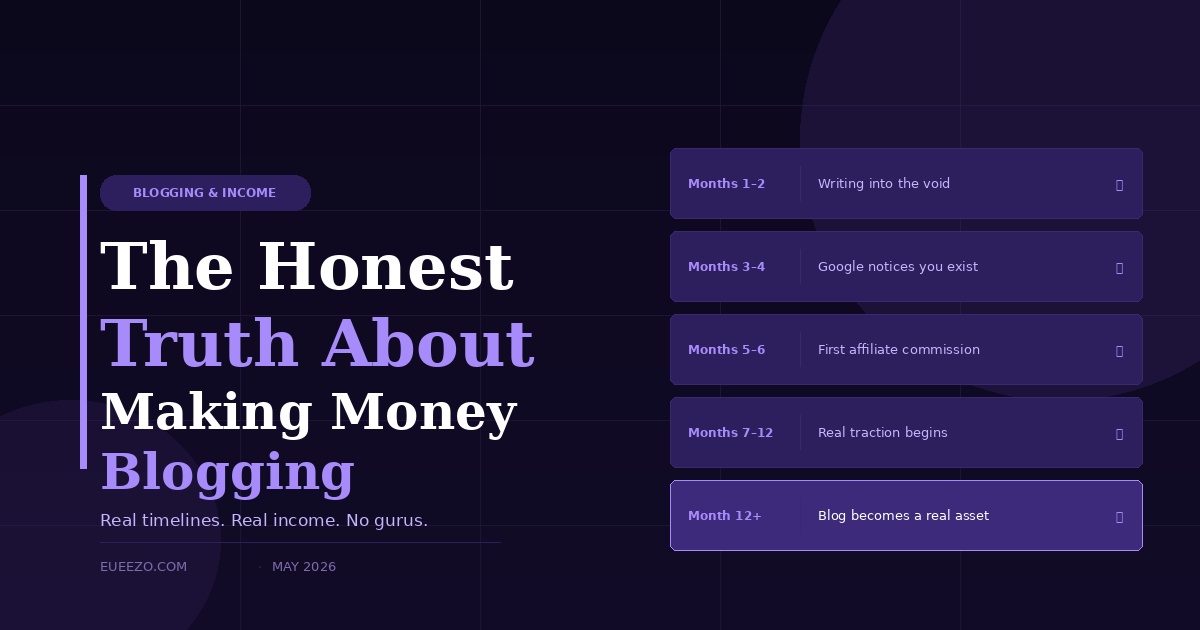
Month 1–2: You are posting into the void. Almost nobody is reading. This is normal and necessary. You are finding your voice, your point of view, your rhythm.
Month 3–4: A few posts start to get traction. People begin to recognise your name in comments and communities. One or two inbound enquiries arrive from people who found you through your content.
Month 6: You are known in a specific corner of your niche. When a particular topic comes up, your name gets mentioned. Inbound work is a meaningful percentage of your total pipeline.
Month 12: Your personal brand is a genuine business asset. It is generating inbound leads, justifying higher rates, and creating opportunities — speaking, collaboration, products — that would have been inaccessible to you a year ago.
None of this happens by accident. It happens because you showed up with a specific point of view, consistently, for long enough that people started to count on it.
The One Thing
If you take only one thing from this post, take this:
Decide what you want to be known for. One thing. Specific enough that a stranger could explain it to someone else in one sentence.
Then go and be known for that thing. In every post, every pitch, every conversation, every piece of work.
The personal brand follows. It always follows.
Eueezo is a blog about building an online income honestly — income reports, freelancing guides, and real lessons from the field. Subscribe below.