Why Recessions Happen — And Why Economies Can’t Grow Forever
Introduction
Every few years, the same fear returns.
Businesses slow hiring.
Consumers spend less.
Investors become nervous.
Headlines warn about economic trouble.
And one word suddenly dominates the news:
Recession.
For many people, recessions feel like economic disasters that appear out of nowhere.
One day the economy seems healthy.
The next day, companies are laying off workers, stock markets are falling, and growth is slowing.
But recessions are not random events.
In fact, they are a normal part of how economies function.
Just as seasons change throughout the year, economies move through periods of expansion and contraction.
The real question isn’t whether recessions will happen.
The question is why they happen.
Understanding recessions helps explain unemployment, stock market crashes, interest rates, business cycles, and some of the most important economic decisions governments make.
Because despite how painful they can be, recessions often reveal a simple truth:
No economy can grow forever without slowing down at some point.
What Is a Recession?
A recession is a significant slowdown in economic activity.
During a recession, economies often experience:
- Slower business growth
- Lower consumer spending
- Rising unemployment
- Reduced investment
- Weak economic confidence
In simple terms:
People spend less.
Businesses earn less.
Economic activity declines.
Recessions vary in severity.
Some are mild.
Others become major economic crises.
Why Economies Grow in Cycles
Many people imagine economic growth as a straight line moving upward forever.
Reality looks very different.
Economies typically move through cycles:
Expansion
Businesses grow.
Employment rises.
Consumers spend more.
Peak
Growth reaches high levels.
The economy becomes very active.
Slowdown
Growth begins weakening.
Spending starts cooling.
Recession
Economic activity declines.
Recovery
Growth gradually returns.
Then the cycle begins again.
This pattern has repeated throughout modern economic history.
Why Growth Cannot Continue Forever
Imagine a restaurant.
Business becomes successful.
Customers increase.
Revenue grows rapidly.
Eventually, however, limits appear.
The restaurant has:
- Limited tables
- Limited staff
- Limited kitchen capacity
Growth becomes harder.
The same principle applies to economies.
Resources are not unlimited.
Workers.
Factories.
Raw materials.
Infrastructure.
At some point, growth naturally slows.
The Role of Consumer Spending
Consumer spending drives a large portion of economic activity.
People buy:
- Food
- Cars
- Electronics
- Homes
- Entertainment
When consumers feel confident, spending increases.
When confidence weakens, spending often declines.
Because businesses depend on customers, lower spending can ripple throughout the economy.
This is one reason recessions sometimes spread quickly.
Why Businesses Cut Back
Businesses constantly make decisions based on expectations.
If managers expect strong demand, they may:
- Hire workers
- Open locations
- Increase production
If they expect weaker demand, they may:
- Delay investments
- Reduce hiring
- Cut costs
These defensive actions can contribute to economic slowdowns.
Businesses react to expectations.
And those reactions often shape economic outcomes.
The Credit Factor
Modern economies rely heavily on credit.
Consumers borrow money.
Businesses borrow money.
Governments borrow money.
Credit helps fuel growth.
But excessive borrowing creates risks.
When debt becomes too large:
- Spending slows
- Loan defaults increase
- Financial stress rises
Many recessions involve some form of debt-related problem.
How Interest Rates Influence Recessions
Central banks often raise interest rates to fight inflation.
Higher rates make borrowing more expensive.
As borrowing slows:
- Home purchases decline
- Business investments decrease
- Consumer spending weakens
This helps control inflation.
But if rates rise too much, economic activity can slow significantly.
Balancing inflation and growth is one of the most difficult challenges in economics.
Why Asset Bubbles Burst
Sometimes recessions follow financial bubbles.
A bubble occurs when asset prices rise far beyond their underlying value.
Examples include:
- Housing bubbles
- Stock market bubbles
- Speculative investment booms
During bubbles, optimism becomes excessive.
People assume prices will continue rising forever.
Eventually reality catches up.
Prices fall.
Confidence collapses.
Economic activity weakens.
The Housing Crash Example
One of the most famous modern recessions occurred during the 2008 Global Financial Crisis.
Housing prices rose rapidly.
Borrowing expanded aggressively.
Many believed property values could only go up.
When housing prices began falling, problems spread throughout the financial system.
Banks suffered losses.
Credit tightened.
Businesses reduced spending.
The result became one of the most severe recessions in modern history.
Why Confidence Matters
Economies run partly on confidence.
When people feel optimistic:
- They spend
- They invest
- They start businesses
When fear spreads:
- Spending declines
- Investments slow
- Hiring weakens
Confidence can amplify both growth and recessions.
This psychological element makes economics surprisingly human.
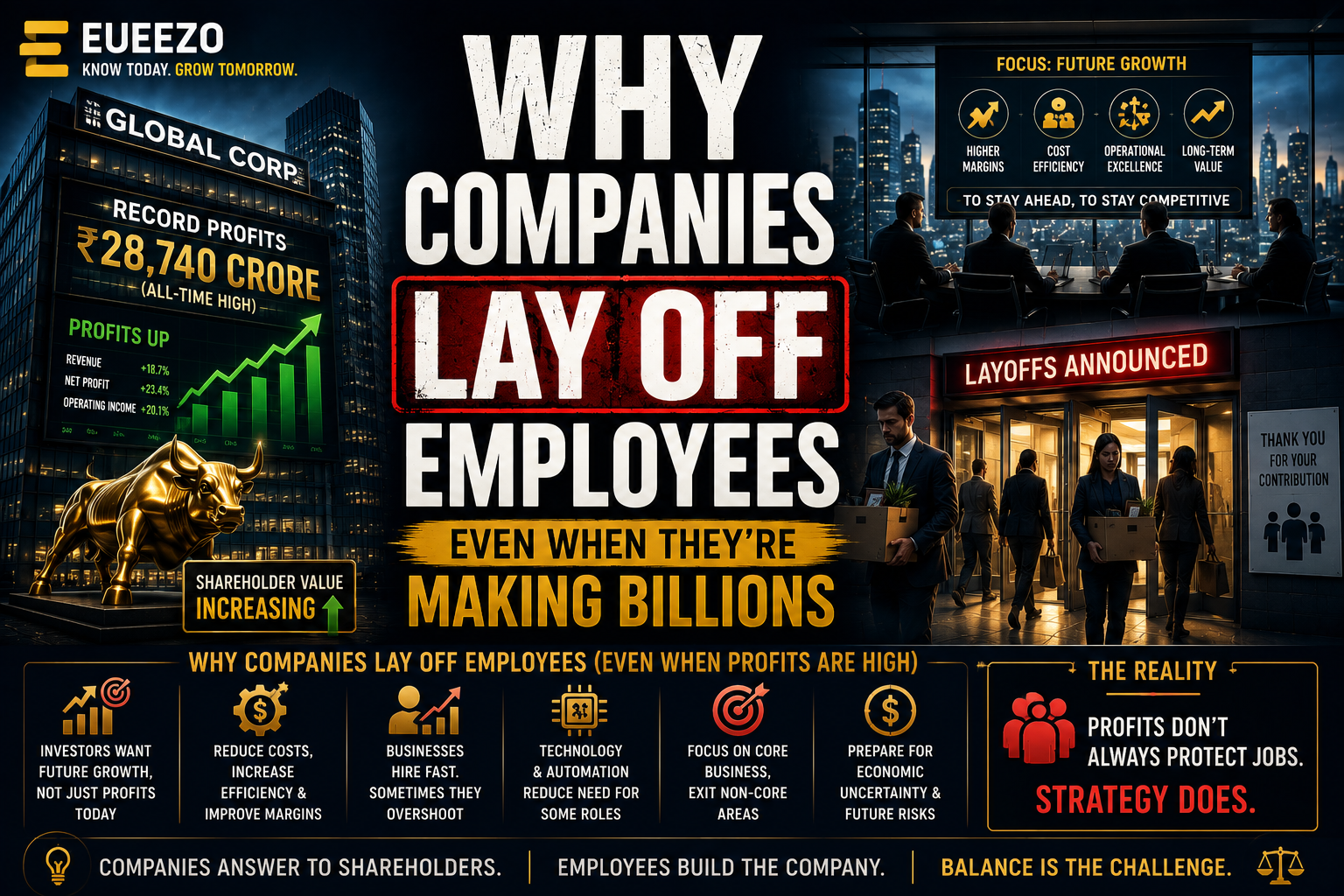
Why Recessions Cause Layoffs
When businesses earn less revenue, they often reduce costs.
Unfortunately, payroll is frequently one of the largest expenses.
As demand weakens:
- Hiring slows
- Promotions decline
- Layoffs increase
Rising unemployment then reduces spending further.
This feedback loop can deepen recessions.
Are Recessions Always Bad?
Recessions are painful.
But economists sometimes describe them as corrective processes.
During periods of excessive growth:
- Weak businesses survive longer than they should
- Debt accumulates
- Resources become misallocated
Recessions can force adjustments.
Inefficient investments disappear.
Unsustainable trends reverse.
The economy resets.
This doesn’t make recessions desirable.
But it helps explain why they occur.
How Governments Fight Recessions
Governments and central banks have several tools.
Lower Interest Rates
Cheaper borrowing encourages spending.
Government Spending
Infrastructure and public projects can stimulate activity.
Tax Relief
Consumers and businesses keep more money.
Financial Support Programs
These can stabilize key industries during crises.
The goal is to support demand until economic confidence returns.
Why Some Recessions Are Worse Than Others
Not all recessions are equal.
Severity depends on factors such as:
- Debt levels
- Financial system stability
- Government responses
- Global conditions
- Consumer confidence
Some recessions last months.
Others take years to recover from.
The causes matter.
The responses matter even more.
What Recessions Mean for Investors
Investors often fear recessions.
Markets frequently decline during economic slowdowns.
Yet history shows an important pattern.
Most recessions eventually end.
Recoveries follow.
Businesses adapt.
Innovation continues.
Economic growth returns.
This is why long-term investors often focus on decades rather than months.
What Recessions Mean for Ordinary People
For individuals, recessions highlight the importance of preparation.
Key financial habits include:
Building an Emergency Fund
Savings provide flexibility during uncertainty.
Reducing Excessive Debt
Lower debt reduces financial stress.
Developing Valuable Skills
Adaptable workers often recover faster.
Thinking Long-Term
Economic cycles are temporary.
Financial discipline lasts much longer.
The Future of Economic Cycles
Technology changes.
Industries change.
Markets change.
But economic cycles continue.
Artificial intelligence.
Automation.
Digital businesses.
New technologies will reshape economies.
Yet periods of expansion and contraction will likely remain.
Human behavior hasn’t changed nearly as much as technology.
And economic cycles are ultimately driven by human decisions.
The Bottom Line
Recessions happen because economies move in cycles.
Growth creates optimism.
Optimism encourages spending and investment.
Eventually, imbalances emerge.
Debt grows.
Asset prices become inflated.
Growth slows.
The economy adjusts.
While recessions can be painful, they are a normal part of economic life.
No economy can expand forever without occasional slowdowns.
Understanding recessions helps explain why governments adjust interest rates, why businesses change hiring plans, and why financial markets fluctuate.
Because economic growth isn’t a straight line.
It’s a cycle.
And understanding that cycle is one of the most important lessons in economics.