
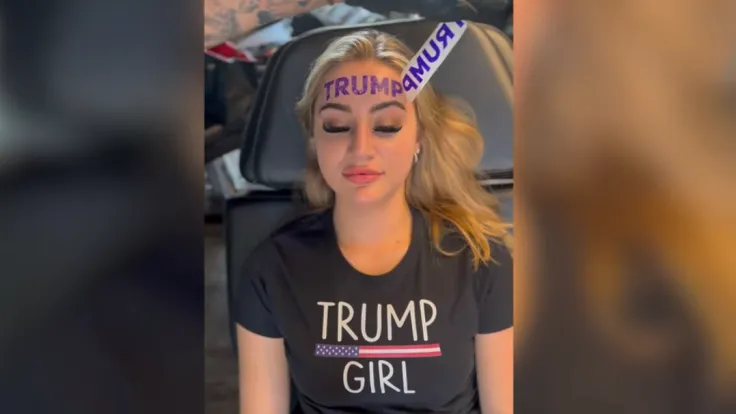
A viral claim spreading across social media about a woman tattooing former U.S. President Donald Trump’s name on her forehead — and later asking for money to remove it — has been proven false.
The story gained traction on platforms like Instagram, X (formerly Twitter), and Facebook, where users shared images of a woman with a large “Trump” tattoo on her forehead. Many posts claimed she regretted the decision and was seeking donations for laser removal.
However, fact-checkers and digital investigators have confirmed that the claim is misleading.
What Actually Happened
The viral images appear to be either digitally altered or taken out of context. In several cases, the tattoo was edited onto the image using software, while in others, the content originated from satirical or staged videos meant for entertainment—not real-life fundraising appeals.
There is no credible evidence that the woman in the viral posts genuinely tattooed the name or asked the public for money to remove it.
How the Story Spread
The claim spread quickly due to its shock value. Posts were often shared without verification, and captions were written to provoke strong reactions—ranging from disbelief to ridicule.
This is a common pattern in viral misinformation:
- Emotional or shocking visuals
- Minimal context
- Rapid resharing without verification
The Bigger Picture
This incident highlights the growing issue of misinformation on social media, where edited images and false narratives can reach millions within hours.
Experts advise users to:
- Check reliable news sources
- Look for fact-checks before sharing
- Be cautious of sensational claims
Bottom Line
The viral story about a woman with a Trump forehead tattoo asking for removal money is not real. It is another example of how quickly false information can spread online—and why verifying before sharing matters more than ever.