
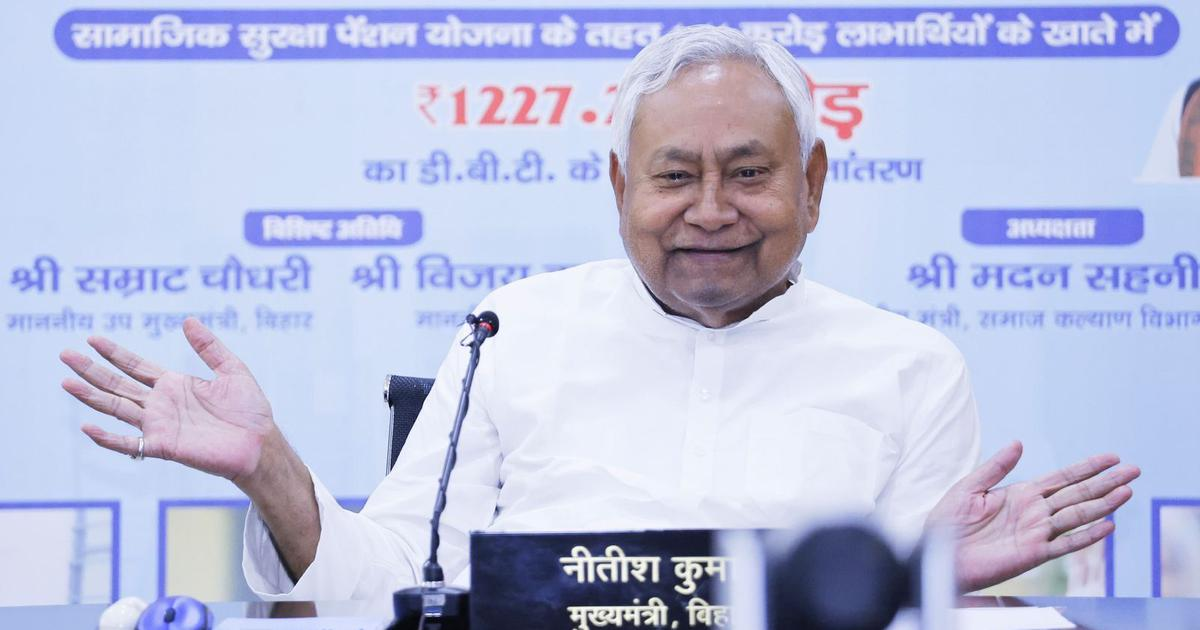
PATNA, India — Veteran Indian politician Nitish Kumar has stepped down as the Chief Minister of the eastern state of Bihar, ending one of the longest and most influential political careers in the state’s modern history.
Kumar announced that he will move to India’s upper house of Parliament, the Rajya Sabha, after leading Bihar politics for nearly two decades. The decision marks a major turning point in the state’s political landscape and raises questions about the future of the “social justice” model that shaped Bihar politics for decades. (Scroll.in)
End of a Long Political Era
Nitish Kumar has been one of the most dominant political figures in Bihar. Over the years, he served multiple terms as chief minister and became known for focusing on governance reforms, infrastructure development, and welfare programs. (The Times of India)
His long tenure helped reshape the state’s politics after decades dominated by caste-based political movements.
However, Kumar’s career has also been marked by several political shifts. He repeatedly changed alliances between different political coalitions, working at various times with both opposition groups and the BJP-led alliance. (www.ndtv.com)
Despite criticism for these moves, he remained a central figure in Bihar politics for nearly twenty years.
The Politics of Social Justice
For decades, Bihar’s politics has revolved around the idea of social justice, a political movement aimed at increasing representation and opportunities for historically disadvantaged communities, particularly lower castes and marginalized groups.
Nitish Kumar positioned himself as a leader who tried to balance development with social justice policies. His political base often included support from extremely backward classes and other marginalized communities. (The Wire)
Programs related to education, welfare, and women’s empowerment were also part of his governance approach.
However, analysts say his departure from the chief minister’s post could weaken the political coalition that supported this model of governance.
A Shift in Bihar’s Political Balance
Kumar’s exit from state leadership could significantly change the balance of power in Bihar.
Political observers believe the move may allow the Bharatiya Janata Party (BJP) to play a larger role in the state’s leadership in the future. (The Indian Express)
If that happens, Bihar’s politics could move in a different direction, potentially placing less emphasis on the traditional social justice framework that dominated the state for decades.
At the same time, Kumar’s party, the Janata Dal (United), will now face the challenge of redefining its leadership and political strategy.
What Comes Next
Although Nitish Kumar is leaving the chief minister’s office, he is not retiring from politics. By entering the Rajya Sabha, he will continue to play a role in national politics.
Still, his exit from Bihar’s top political post raises an important question: who will now carry forward the politics of social justice in the state?
For many observers, Kumar’s departure may signal the end of an era — and the beginning of a new phase in Bihar’s political history.