
Tehran — Mojtaba Khamenei, the son of Iran’s longtime Supreme Leader Ayatollah Ali Khamenei, has reportedly been selected as the country’s new Supreme Leader, according to multiple media reports.
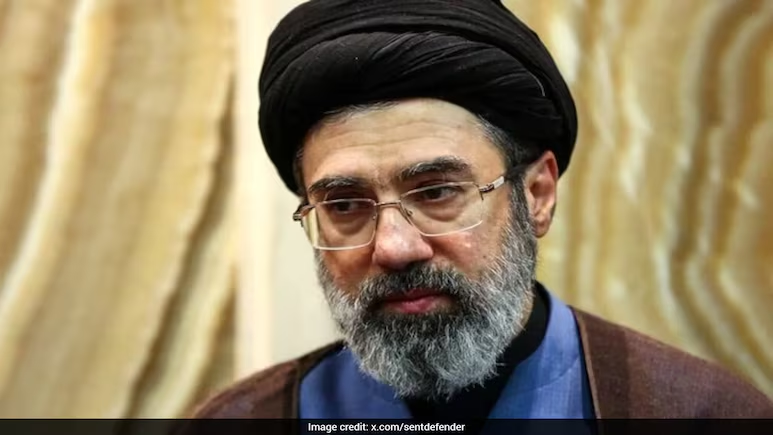
The decision was reportedly made by Iran’s powerful clerical body known as the Assembly of Experts, which is responsible for choosing the country’s top leader. The selection comes after the death of Ayatollah Ali Khamenei, who had led Iran since 1989. (Rediff)
Leadership Change During a Crisis
Iran is currently facing a major political and military crisis following escalating conflict in the Middle East. Ayatollah Ali Khamenei died during recent military strikes linked to the ongoing confrontation involving Iran, Israel, and the United States. (The Guardian)
After his death, an interim leadership council temporarily took over responsibilities while the Assembly of Experts began the process of choosing a successor. (Wikipedia)
Reports now say the council has elected Mojtaba Khamenei, who is believed to be around 56 years old, to take over the role.
A Powerful Figure Behind the Scenes
Although Mojtaba Khamenei has never held a formal government position, he has long been considered an influential figure within Iran’s political system.
For years he worked closely within his father’s office and built strong connections with key institutions, including the Islamic Revolutionary Guard Corps (IRGC). Analysts say he played an important behind-the-scenes role in shaping political decisions and maintaining the ruling establishment’s power. (ایران اینترنشنال | Iran International)
Because of this influence, he has often been mentioned as a possible successor to his father.
Controversy Over a “Family Succession”
The reported decision has sparked debate among observers and critics.
Iran’s political system was created after the 1979 Islamic Revolution, which overthrew a monarchy. Because of this history, some critics argue that leadership passing from father to son could resemble a dynastic succession, something the Islamic Republic originally opposed. (New York Post)
Some reformist voices and analysts also question Mojtaba’s qualifications, noting that he has not held high-ranking religious or political office.
What Happens Next
If confirmed, Mojtaba Khamenei will become one of the most powerful figures in Iran. The Supreme Leader has ultimate authority over the country’s military, judiciary, and major state institutions.
The leadership transition comes at a critical moment for Iran, as the country faces regional tensions, economic pressure from sanctions, and political uncertainty at home.
Observers say the coming weeks will be crucial in determining how Iran’s new leadership shapes the country’s domestic policies and its role in the Middle East.