

Introduction
A rescue dog with advanced cancer has shown significant improvement after receiving a personalised vaccine designed with the help of artificial intelligence. The unusual case is drawing attention from researchers who believe it could help shape future cancer treatments for animals and humans.
A desperate search for a solution
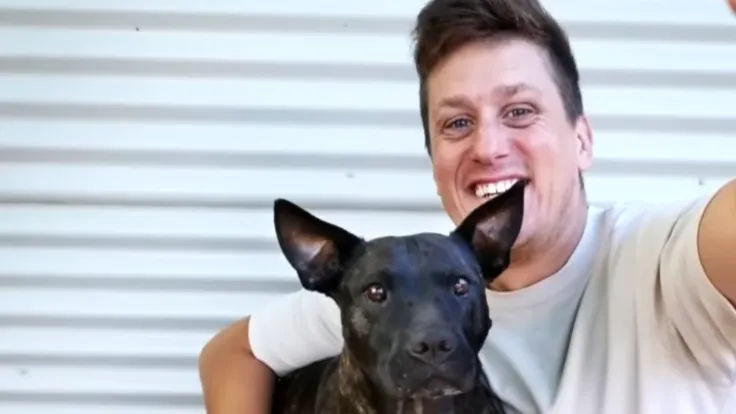
Rosie, an eight-year-old rescue dog living in Sydney, was diagnosed with aggressive mast cell cancer in 2024. Her owner, technology entrepreneur Paul Conyngham, tried traditional treatments such as surgery and chemotherapy. These treatments slowed the disease but did not reduce the tumours. Doctors warned that Rosie might only have months to live. (International Business Times UK)
Determined to try everything possible, Conyngham decided to use his background in data science and artificial intelligence to look for new options.
Using AI to design a vaccine
Conyngham turned to AI tools such as ChatGPT and worked with scientists to study Rosie’s DNA. Researchers sequenced the DNA from her tumour and compared it with healthy DNA from her blood to identify the genetic mutations causing the cancer. (mint)
With this data, scientists helped create a personalised mRNA vaccine designed specifically to target Rosie’s cancer cells. The vaccine was produced with the help of researchers from the University of New South Wales.
Tumor begins to shrink
Rosie received the experimental vaccine during the Christmas period in 2025. Within weeks, one of her large tumours shrank significantly—reportedly by about half. (mint)
While the tumour has not completely disappeared, veterinarians say the treatment has made Rosie more comfortable and improved her overall health.
A possible future for cancer treatment
Scientists involved in the case say the experiment shows the potential of combining AI with genetic research to create personalised cancer therapies.
However, experts caution that this is only a single case. More research and clinical trials will be needed before similar treatments can be widely used for animals or humans.
Bottom line
Rosie’s recovery highlights how artificial intelligence could help speed up medical discoveries. By analysing genetic data and designing personalised treatments, AI may play an important role in the future of cancer research.