
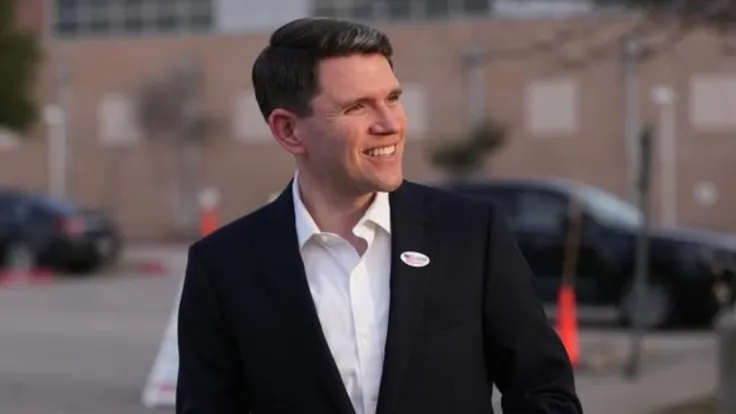
Debate grows over artificial intelligence in election campaigns
A political advertisement using artificial intelligence to create a deepfake video of a Texas Senate candidate has sparked debate about the role of AI in elections.
The controversial ad features a computer-generated version of James Talarico, a Democratic candidate in the Texas Senate race. The video was released online by the National Republican Senatorial Committee (NRSC) and shows what appears to be Talarico speaking directly to viewers. (International Business Times UK)
However, the video is not real.
Instead, it uses AI technology to recreate Talarico’s face and voice. The digital version of the candidate appears to read and comment on some of his past social media posts. Critics say the video could mislead voters because the statements in the video were not actually spoken by the real candidate. (International Business Times UK)
What the AI Video Shows
In the advertisement, the AI-generated version of Talarico reads tweets he posted in previous years about issues such as transgender rights, religion, and race.
The video also references a tweet from 2013 where Talarico mentioned attending a Planned Parenthood event as a teenager. The AI version of the candidate then adds commentary appearing to praise these posts.
But according to reports, there is no evidence that Talarico ever made those extra comments shown in the video. (International Business Times UK)
Although the advertisement includes a small label saying “AI GENERATED,” critics argue that the text is easy to miss, especially for people scrolling quickly on social media.
Experts Warn the Video Looks Very Real
Digital forensics experts say the deepfake video is highly convincing.
Hany Farid, a specialist at the University of California, Berkeley, said the AI recreation looks realistic and many viewers might not immediately realize it is fake.
He noted that while there are minor technical flaws, the face and voice are very accurate, which makes the video appear believable to most people. (International Business Times UK)
Republicans Defend the Advertisement
The Republican committee behind the video says the ad simply highlights Talarico’s own past statements.
Supporters argue the AI was only used to present publicly available posts in a more visual way for voters. They also point out that the tweets referenced in the ad are real.
However, the organization did not directly address concerns about the additional comments spoken by the AI-generated version of the candidate.
Talarico Campaign Calls the Ad Misleading
Talarico’s campaign strongly criticized the deepfake video.
A spokesperson for the campaign said the ad was an attempt to mislead voters ahead of the upcoming election. The campaign added that while opponents are creating AI videos, their focus remains on building support across Texas. (International Business Times UK)
Growing Concerns About AI in Elections
The controversy has renewed calls for stronger rules on artificial intelligence in political campaigns.
Some lawmakers warn that deepfake videos could spread misinformation and influence voters if they become more common in election advertising.
Texas already has a law restricting deceptive deepfake videos in elections, but the rule only applies within 30 days of an election and requires proof that the content was intended to harm a candidate. (International Business Times UK)
As AI technology becomes easier to use, experts say political campaigns from both parties may increasingly experiment with AI-generated images, videos, and other synthetic media.