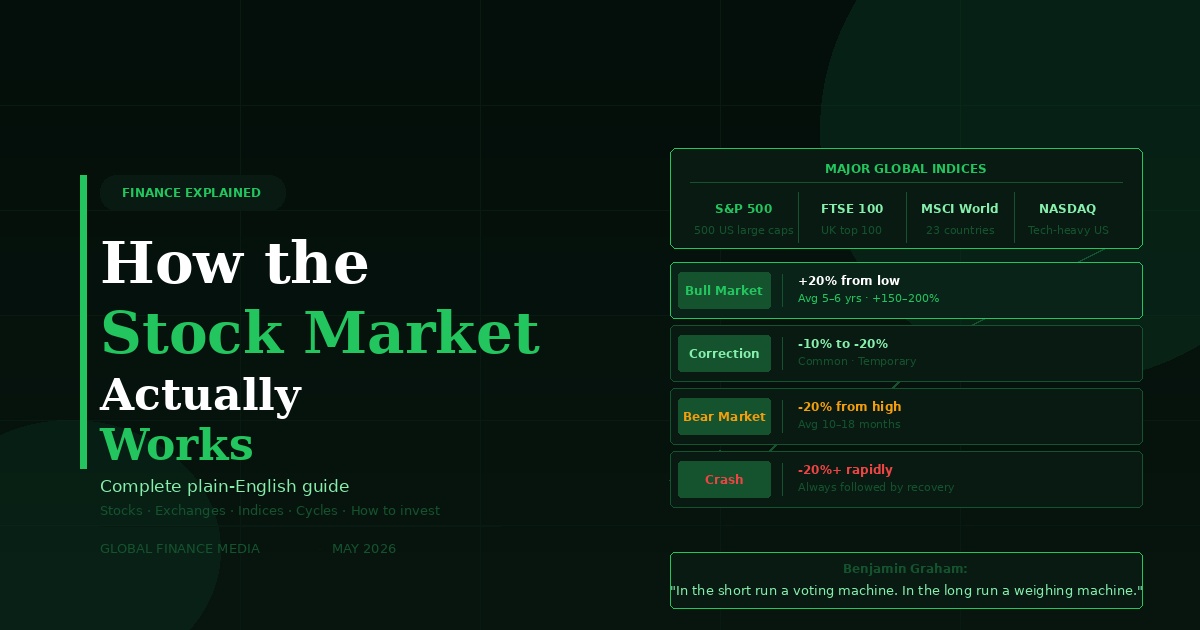
Why The Rich Keep Getting Richer — The Power of Owning Assets
Introduction
One of the most common questions in economics is surprisingly simple:
Why do rich people seem to get richer even when they stop working?
While many people spend decades exchanging time for money, wealthy individuals often see their wealth grow while they sleep.
Their stocks increase in value.
Their real estate appreciates.
Their businesses generate profits.
Their investments earn returns.
Meanwhile, millions of workers continue trading hours for income.
This creates an important distinction.
Most people earn money through labor.
Many wealthy people earn money through ownership.
And that difference changes everything.
Understanding how assets work is one of the most important lessons in personal finance.
Because the biggest wealth gap in modern society is often not between people who work hard and people who don’t.
It’s between people who own assets and people who don’t.
What Is an Asset?
An asset is something that has value and can generate future economic benefits.
Examples include:
- Stocks
- Real estate
- Businesses
- Bonds
- Intellectual property
- Rental properties
- Royalties
Assets differ from income.
Income is money you earn.
Assets are things you own.
This distinction may seem small.
But it has enormous consequences over time.
The Difference Between Working and Owning
Imagine two people.
Person A
Earns ₹1 lakh per month from a job.
Person B
Owns assets worth ₹2 crore.
Person A earns money by working.
Person B earns money because assets generate returns.
If Person A stops working, income usually stops.
If Person B stops working, many assets continue producing value.
This is why ownership is so powerful.
Assets can work even when you don’t.
How Wealth Compounds
Albert Einstein supposedly called compound interest the eighth wonder of the world.
Whether he actually said it or not, the principle remains true.
Compounding occurs when returns generate additional returns.
Imagine investing ₹1 lakh.
If it grows by 10% annually:
- Year 1: ₹1,10,000
- Year 2: ₹1,21,000
- Year 3: ₹1,33,100
Growth begins accelerating.
Not because you’re working harder.
Because the asset is working.
Over decades, compounding can become extraordinarily powerful.
Why Income Alone Rarely Creates Wealth
High income helps.
But income alone doesn’t guarantee wealth.
Many people earn large salaries while accumulating little net worth.
Why?
Because income can disappear as quickly as it arrives.
Expenses often rise alongside earnings.
This phenomenon is known as lifestyle inflation.
Higher income creates opportunity.
Ownership creates wealth.
The two are connected but not identical.
The Asset-Rich Mindset
Wealthy individuals often ask a different question.
Instead of asking:
“How can I make more money?”
They ask:
“How can I own more assets?”
The difference is subtle.
But powerful.
Assets can:
- Generate income
- Appreciate in value
- Create additional opportunities
Money spent on consumption often disappears.
Money invested in assets may continue producing value.
Why Stocks Matter
When you buy a stock, you’re purchasing partial ownership of a business.
If the business grows:
- Revenue increases
- Profits increase
- Company value may increase
As an owner, you potentially benefit.
This is why stock ownership has historically played such an important role in wealth creation.
The stock market isn’t simply a place to trade numbers.
It’s a marketplace for ownership.
Why Business Owners Build Wealth Faster
Business ownership can be particularly powerful.
A successful business can:
- Generate profits
- Increase in value
- Expand operations
- Hire employees
Unlike individual labor, businesses can scale.
One person’s time is limited.
A business can potentially grow far beyond the founder’s personal effort.
This is one reason entrepreneurs often appear prominently on wealth rankings.
Real Estate and Wealth Building
Real estate remains one of the most popular wealth-building assets in the world.
Why?
Because property can generate returns in multiple ways:
Appreciation
Property values may increase.
Rental Income
Owners may receive regular cash flow.
Leverage
Borrowed money can amplify gains.
Not every property investment succeeds.
But real estate has historically been an important wealth-building tool.
The Rich Don’t Just Save
Many people believe wealthy individuals simply save more money.
Saving matters.
But ownership matters more.
Cash often loses purchasing power because of inflation.
Assets often grow faster than inflation over long periods.
The goal is not merely accumulating money.
The goal is accumulating productive assets.
Why Asset Prices Rise
Asset values often increase because economies grow.
Businesses innovate.
Populations expand.
Technology improves productivity.
As economic activity increases, valuable assets frequently benefit.
Owners participate in that growth.
Non-owners often experience it indirectly.
The Wealth Gap Explained
A significant portion of wealth inequality can be explained by ownership.
Consider two individuals:
One owns:
- Stocks
- Real estate
- Businesses
The other owns primarily:
- Personal belongings
- A paycheck
As asset values rise over decades, the gap may widen.
This doesn’t mean wealth accumulation is easy.
But it helps explain why ownership plays such an important role in economic outcomes.
Why Time Favors Asset Owners
One of the most powerful forces in finance is time.
Assets benefit from:
- Compounding
- Economic growth
- Innovation
- Reinvestment
The longer quality assets are held, the greater the potential impact.
This is why many wealthy individuals emphasize patience.
Time often matters more than timing.
Common Mistakes People Make
Confusing Income With Wealth
High earners are not automatically wealthy.
Waiting Too Long
Many people postpone investing for years.
Time is one of the most valuable resources investors possess.
Chasing Trends
Speculation often distracts from long-term ownership.
Ignoring Compounding
Small investments can grow significantly over long periods.
Consistency matters.
The Asset Economy
Modern economies increasingly reward ownership.
Consider some of the world’s wealthiest individuals.
Their fortunes often come from owning:
- Businesses
- Stocks
- Intellectual property
- Real estate
Not from salaries.
This doesn’t mean employment lacks value.
Jobs often provide the income needed to acquire assets.
But long-term wealth creation usually involves moving from earning to owning.
How Ordinary People Can Start
Ownership is not reserved for billionaires.
Many people begin with:
- Index funds
- Retirement accounts
- Small investments
- Business ideas
- Real estate savings goals
The amounts may start small.
The principle remains the same.
Acquire assets.
Allow time to work.
Reinvest returns.
Repeat.
Why Financial Education Matters
Schools often teach people how to earn money.
Far fewer teach people how to build wealth.
Understanding assets changes how people view:
- Careers
- Investing
- Saving
- Spending
The goal shifts from immediate consumption to long-term ownership.
This mindset difference can transform financial outcomes over decades.
The Future of Wealth Creation
Technology continues creating new asset classes.
Examples include:
- Digital businesses
- Online content
- Software products
- Intellectual property
The tools change.
The principle does not.
Ownership remains one of the most powerful wealth-building mechanisms ever created.
The Bottom Line
The rich often get richer not because they work harder than everyone else.
They frequently own assets that continue generating value over time.
Assets can:
- Produce income
- Increase in value
- Compound returns
- Create opportunities
Workers earn money through labor.
Owners earn money through ownership.
The most effective wealth-building strategy often combines both.
Use income to acquire assets.
Then allow those assets to work alongside you.
Because while income pays the bills, ownership is often what builds lasting wealth.