
Tehran/Lucknow — Recent developments in Iran have drawn global attention not only to the country’s leadership but also to an unexpected historical connection with India. A small village in Uttar Pradesh’s Barabanki district has once again come into the spotlight because of its links to the family of Iran’s revolutionary leadership. (www.ndtv.com)
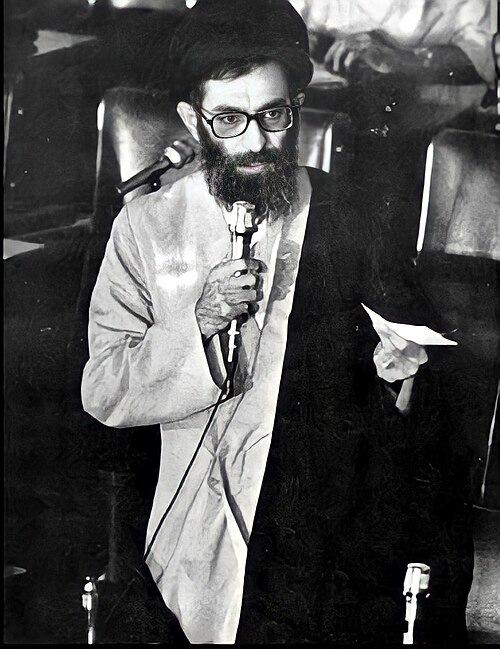
Kintoor, a historic village in Barabanki, is believed to be the ancestral home of the family of Ayatollah Ruhollah Musavi Khamenei, the founder of the Islamic Republic of Iran and leader of the 1979 Islamic Revolution. (www.ndtv.com)
The India Connection
The connection traces back to Syed Ahmad Musavi, Khamenei’s grandfather, who was born in Kintoor in the early 19th century. He later migrated to the Shia religious center of Najaf in Iraq before settling in the Iranian city of Khamenei, where the family established its roots. (www.ndtv.com)
Musavi retained the title “Hindi,” which reflected his Indian origin and remained part of the family’s identity in Iran. This ancestry is still recorded in historical and religious documents. (www.ndtv.com)
From a Village to a Revolution
Khomeini’s family eventually rose to major religious and political influence in Iran. Decades later, Khomeini led the 1979 Islamic Revolution that overthrew the monarchy and established Iran as an Islamic republic. (www.ndtv.com)
The revolution transformed Iran’s political system and created the position of Supreme Leader, which became the country’s highest authority. (The Economic Times)
A Historic Center of Shia Scholarship
Kintoor has long been known as a center of Shia religious learning, which helps explain the strong religious background of Khomeini’s family. (www.ndtv.com)
Although today it is a quiet village in northern India, its historical connection to Iran’s leadership continues to attract attention whenever major events involving Iran occur. (The Times of India)
A Shared Historical Link
The story of Kintoor highlights how historical migration created links between India and Iran centuries ago. While the connection is mostly symbolic today, it remains a notable example of the deep cultural and religious ties between the two countries. (Free Press Journal)